




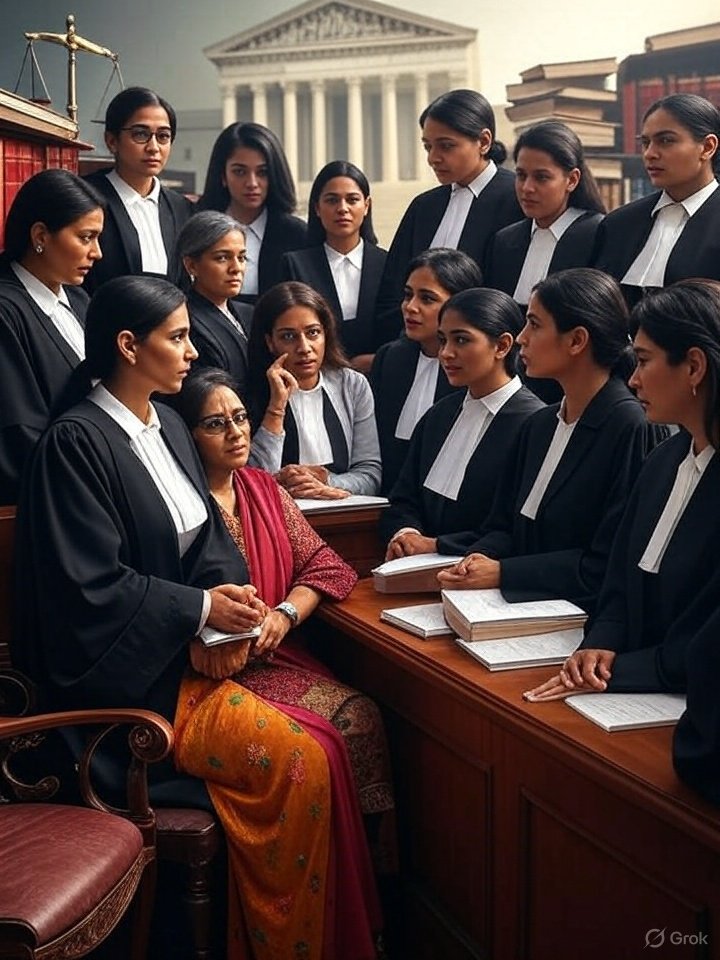
The Three-Year Bar Experience Rule: A Barrier to Gender Equity in the Judiciary
The Supreme Court’s recent decision to reinstate a mandatory three-year legal practice requirement for candidates aspiring to become civil judges has sparked a significant debate about its implications, particularly for women judiciary candidates. While the rule aims to ensure that judicial officers possess practical courtroom experience, it inadvertently erects barriers for women, exacerbating existing gender disparities in the legal profession. This article examines the challenges posed by this ruling, its potential impact on women aspirants, and possible solutions to mitigate its adverse effects, while analyzing its broader implications for India’s judiciary.
The Problem: A Gendered Hurdle in Judicial Aspirations
The reinstatement of the three-year Bar experience rule, as mandated by the Supreme Court on May 20, 2025, requires candidates to have at least three years of legal practice before appearing for judicial service examinations. This decision reverses a 2002 ruling that allowed fresh law graduates to directly compete for judicial posts, a move that had democratized access to the judiciary for first-generation lawyers, women, and those from marginalized backgrounds. While the intent behind the rule is to enhance judicial competence through practical exposure, it disproportionately affects women due to systemic socio-economic and cultural factors.
According to the National Family Health Survey (2019-21), the median age of marriage for women in India is 19.2 years, significantly lower than 24.9 years for men. Most law students complete their five-year integrated law degree around the age of 22. With the three-year practice requirement, women candidates are effectively pushed to 25 or older before they can even attempt the judicial service exams. This timeline clashes with societal pressures, particularly in traditional and rural settings, where women face intense expectations to marry and prioritize domestic responsibilities. As advocate Shailesh K. Rajora notes, “Many capable women may be forced to abandon or delay their judicial ambitions before they even become eligible to compete.”
Moreover, the legal profession’s initial years are financially precarious, with many young lawyers earning meager incomes—often between ₹5,000-20,000 in the first two years, barely enough to cover living expenses in urban centers. For women from marginalized socio-economic backgrounds, sustaining a legal practice for three years without financial stability or familial support is a daunting challenge. The rule also shortens the preparation window for judicial exams, especially for women pursuing a three-year LL.B. after graduation, given the upper age limit of 30–32 years for general category candidates in many states.
The Impact: Widening the Gender Gap in the Judiciary
The three-year rule risks deepening the already stark gender imbalance in India’s judiciary. Data from 2023 shows that only 15.31% of practicing advocates in India are women, and female representation in the higher judiciary is even lower—12.5% in the Supreme Court and 13.16% in High Courts. The mandatory practice requirement could further discourage women from pursuing judicial careers, as the prolonged timeline and financial insecurity deter many from continuing in the profession. This is particularly true for women who face familial pressures to relocate after marriage or shoulder childcare responsibilities, which often interrupt their careers.
The rule also overlooks the structural inequalities in legal education and practice. Many law schools, especially in tier-2 and tier-3 cities, lack adequate faculty, infrastructure, or practical training, leaving graduates ill-prepared for the demands of legal practice. Without systemic reforms to improve legal education and support early-career lawyers, the three-year rule may exclude talented women from the judiciary, perpetuating a male-dominated bench that fails to reflect the diversity of Indian society.
The Supreme Court’s intention to foster a “more competent and mature judiciary” is commendable, but as legal scholar Rangin Pallav Tripathy argues, “By bringing back the three-year practice rule, the Supreme Court shuts the door on many women to become district judges—without data, debate, or even a nod to ground realities.” This lack of consideration for gendered realities risks undermining the judiciary’s commitment to equality and inclusivity.
Solutions: Bridging the Gap for Women Aspirants
To address the challenges posed by the three-year rule, a multi-pronged approach is necessary to support women judiciary candidates while maintaining the judiciary’s quality. First, state bar councils and judicial academies should introduce mandatory stipends for young lawyers during their initial years of practice. A modest stipend of ₹20,000–30,000 per month could alleviate financial pressures, enabling women from marginalized backgrounds to sustain their careers.
Second, legal education must be reformed to incorporate practical training from the outset. The Bar Council of India (BCI) and University Grants Commission (UGC) should collaborate to integrate courtroom exposure, internships, and mentorship programs into law school curricula. This would ensure that graduates gain practical experience during their studies, reducing the burden of the three-year requirement.
Third, state governments should consider relaxing the upper age limit for judicial service exams for women candidates to account for the additional time required to meet the practice requirement. Additionally, provisions such as maternity benefits, creche facilities near court premises, and robust mechanisms to address workplace harassment (under the POSH Act) could create a more supportive environment for women lawyers.
Finally, the judiciary and bar associations must adopt affirmative action measures to increase female representation. The Supreme Court’s December 2024 ruling reserving 30% of leadership positions in Delhi’s district bar associations for women is a step in the right direction. Similar reservations for women in judicial appointments could ensure a more equitable pipeline to the bench.
Analysis: A Missed Opportunity for Inclusive Justice
The three-year Bar experience rule reflects a well-intentioned effort to enhance judicial competence but fails to account for the structural barriers that disproportionately affect women. By prioritizing practical experience without addressing the socio-economic and cultural constraints faced by women, the rule risks reinforcing gender disparities in the judiciary. The decision also highlights a broader issue: the lack of data-driven policymaking. The Supreme Court’s ruling was made without empirical evidence on how the practice requirement impacts diverse candidate pools or improves judicial quality.
Furthermore, the rule assumes that three years of practice guarantees competence, yet the 1924–25 Civil Justice Committee Report noted that such a requirement does not ensure meaningful experience. Instead, the focus should be on reforming legal education and judicial training to equip all candidates—men and women—with the necessary skills. The inclusion of law clerk experience in the three-year requirement is a positive step, but it is insufficient without broader systemic changes.
The judiciary is a pillar of India’s democracy, and its composition must reflect the society it serves. As former Supreme Court judge Justice Indira Banerjee aptly stated, “There can be no true justice without the participation of women in decision-making bodies.” By creating barriers for women aspirants, the three-year rule undermines this principle, potentially depriving the judiciary of diverse perspectives essential for delivering equitable justice.
Conclusion
The reinstatement of the three-year Bar experience rule is a double-edged sword. While it seeks to strengthen the judiciary, it inadvertently marginalizes women candidates, particularly those from disadvantaged backgrounds. To ensure that the judiciary remains accessible and representative, policymakers must implement targeted interventions—stipends, legal education reforms, and affirmative action—to support women aspirants. Only then can India’s judiciary truly embody the principles of equality and justice it upholds.




I have read so many posts on the topic of the blogger lovers except this article is really
a good paragraph, keep it up.