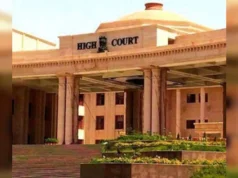

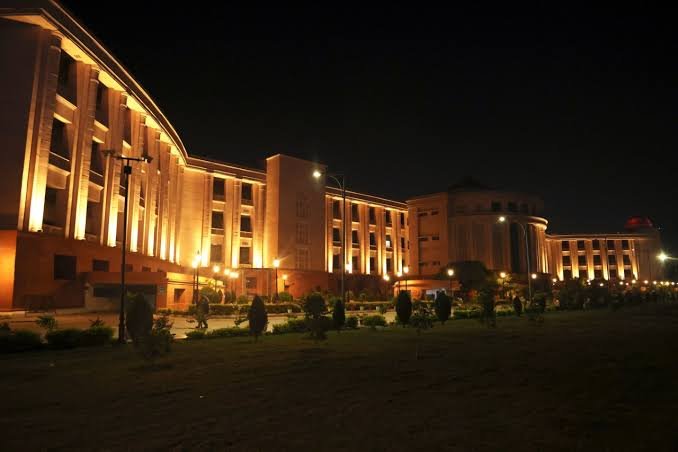
Lucknow: The Allahabad High Court (Lucknow Bench) has issued notices of a significant Public Interest Litigation (PIL) highlighting the disparity in voting rights between rural and urban voters in Uttar Pradesh. The division bench, comprising Justice Rajan Roy and Justice Indrajeet Shukla, issued notices on Friday to the State Election Commission and the Uttar Pradesh Government, granting them four weeks to file their responses.
The PIL, filed by practicing advocate Sunil Kumar Maurya, challenges the current practice in UP Panchayat elections where ballot papers neither carry the names of the candidates nor the ‘None of the Above’ (NOTA) option.
The Core Issue: ‘Arbitrary’ Classification
The petition, argued by counsels Abhishek Yadav, Devendra Pratap Singh, Mohammad Taha Amir, and Shri Dhar Pandey, contends that the absence of NOTA and candidate names violates Article 14 of the Constitution of India.
The plea highlights a stark contradiction while Lok Sabha, Vidhan Sabha, and even Urban Local Body (Nagar Nikay) elections in the state provide voters with the NOTA option and clearly printed candidate names, Panchayat elections rely solely on symbols. The petitioner argues that this creates an “arbitrary classification” that treats rural voters differently from their urban counterparts, effectively depriving them of an informed choice.
Constitutional Rights and SC Precedent
Relying on the landmark Supreme Court judgment in People’s Union for Civil Liberties (PUCL) v. Union of India (2013), the plea asserts that the “Right to Vote includes the Right not to Vote.”
The petitioner argues that by denying the NOTA option, the authorities are forcing a voter who wishes to express dissent to either abstain from voting entirely or violate secrecy regulations. The plea states that NOTA is the only mechanism to record dissent while maintaining the secrecy of the ballot.
Furthermore, the petition points out that printing only symbols “deprives the voter of clarity,” leading to confusion—especially when multiple candidates are allotted similar-looking symbols. This, the plea argues, forces rural citizens to “vote blindly,” violating the fundamental right of expression under Article 19(1)(a).
Administrative Difficulties vs. Fundamental Rights
The petition also places on record an admission by the State Election Commission. In an RTI reply dated August 20, 2025, the Commission admitted to the absence of NOTA, citing logistical challenges such as the high volume of ballots (55-60 crores) and the short timeframe between symbol allotment and polling.
Challenging this stance, the petitioner submitted that “administrative or logistical difficulties cannot be a ground to deny a fundamental right.” The plea terms the respondents’ justification as legally unsustainable, seeking a writ of Mandamus to ensure future elections uphold the democratic rights of voters in rural UP.
The High Court has granted the respondents (State Election Commission and UP Govt) four weeks to file a counter-affidavit. The petitioner has been allowed two weeks thereafter to file a rejoinder. The matter will be listed for hearing following these submissions.