Justice Yashwant Varma Faces Impeachment Threat: Unraveling the In-House Procedure and Historical Precedents
“The case of Justice Yashwant Varma underscores the delicate balance between judicial independence and accountability, testing the resilience of India’s constitutional mechanisms in ensuring public trust in the judiciary.”
— Literal Law Editorial Team
In a significant development that has sent ripples through India’s judicial corridors, Chief Justice of India (CJI) Sanjiv Khanna has forwarded the findings of a three-judge in-house inquiry committee to President Droupadi Murmu and Prime Minister Narendra Modi, recommending the initiation of impeachment proceedings against Justice Yashwant Varma of the Allahabad High Court. The committee’s report, submitted on May 4, 2025, indicts Justice Varma in connection with allegations of unaccounted cash discovered at his former official residence in Delhi following a fire on March 14, 2025. This article delves into the in-house inquiry procedure, the allegations against Justice Varma, and past instances of judicial misconduct in India.
The Allegations and Inquiry
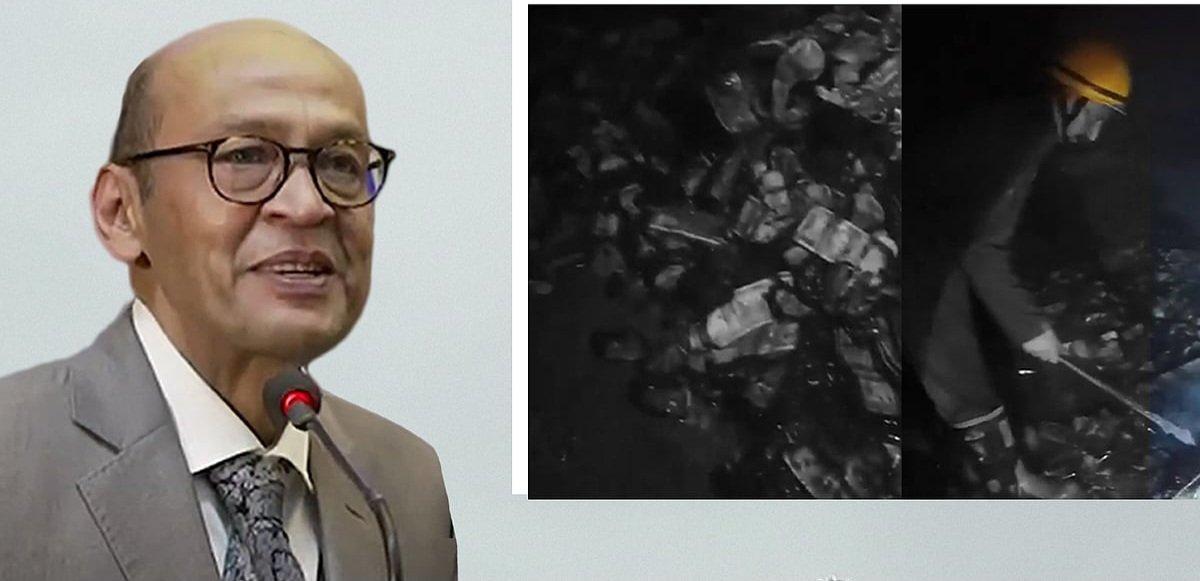
The controversy erupted when firefighters, responding to a blaze at Justice Varma’s Tughlaq Crescent residence in Delhi, reportedly discovered partially burnt sacks of currency notes in a storeroom. The incident prompted an immediate response from the judiciary. Delhi High Court Chief Justice D.K. Upadhyaya conducted a preliminary inquiry, which concluded that the matter warranted a deeper investigation. On March 22, 2025, CJI Khanna constituted a three-member committee comprising Punjab and Haryana High Court Chief Justice Sheel Nagu, Himachal Pradesh High Court Chief Justice G.S. Sandhawalia, and Karnataka High Court Justice Anu Sivaraman to probe the allegations.
The committee was tasked with addressing three critical questions: the source of the cash, how Justice Varma accounted for its presence, and who removed the unburnt currency from the scene the following day. The panel examined forensic evidence, call data records, and testimonies from 50 witnesses, including police and fire service personnel. Justice Varma, in his defense, denied the presence of any cash, asserting that the storeroom was accessible to staff and that neither he nor his family were shown the alleged sacks. He further claimed to be in Bhopal at the time of the incident and alleged a conspiracy to tarnish his reputation.
The committee’s report, however, confirmed the recovery of a significant amount of cash, contradicting Justice Varma’s claims. On May 4, 2025, CJI Khanna shared the findings with Justice Varma, advising him to either resign or opt for voluntary retirement. Justice Varma’s refusal to comply has set the stage for a rare and complex impeachment process.
The In-House Procedure: A Judicial Safeguard
The in-house inquiry procedure, formalized by the Supreme Court in the 1995 C. Ravichandran Iyer v. Justice A.M. Bhattacharjee case, serves as an internal mechanism to address allegations of misconduct against judges of constitutional courts. It aims to balance judicial independence with accountability while avoiding public trials that could erode public trust in the judiciary.
Under this procedure, a complaint against a judge is first assessed for prima facie credibility. If substantiated, the CJI constitutes a committee of senior judges to conduct a confidential inquiry. The judge in question is given an opportunity to respond to the allegations, ensuring adherence to principles of natural justice. If the committee’s findings indict the judge, the CJI advises resignation or voluntary retirement. Should the judge refuse, as in Justice Varma’s case, the CJI forwards the report to the President and the Prime Minister, recommending impeachment under Article 217 of the Constitution for High Court judges or Article 124 for Supreme Court judges.
The impeachment process is arduous, requiring a motion in either the Lok Sabha (supported by at least 150 MPs) or the Rajya Sabha (supported by 50 MPs). The motion must be passed by a special majority—two-thirds of the members present and voting, and a majority of the total membership of each House. The process involves a formal investigation by a committee under the Judges Inquiry Act, 1968, followed by debates in both Houses of Parliament. If approved, the President issues an order for the judge’s removal.
Historical Context: Rare Instances of Judicial Removal
The judiciary’s handling of misconduct allegations has historically been cautious, with impeachment proceedings being exceptionally rare. One notable case is that of Justice Soumitra Sen of the Calcutta High Court. In 2008, a three-judge committee found him guilty of misappropriating funds as a court-appointed receiver. Despite being advised to resign, Justice Sen sought a personal hearing, and the Supreme Court Collegium reiterated its recommendation for removal. In 2011, the Rajya Sabha passed an impeachment motion, but Justice Sen resigned before the Lok Sabha could vote, rendering the process moot.
Another significant case involved Justice P.D. Dinakaran of the Sikkim High Court, who faced allegations of land-grabbing and corruption in 2009. A parliamentary committee was constituted, but Justice Dinakaran resigned in 2011 before the impeachment process could conclude. Similarly, in 1995, Bombay High Court Chief Justice A.M. Bhattacharjee resigned following pressure from the local Bar over allegations of receiving disproportionate royalties from a foreign publisher, suspected to be a pretext for illicit payments.
These cases underscore the judiciary’s preference for resolving misconduct allegations internally, with resignation often preempting formal impeachment. Justice Varma’s refusal to resign, however, places his case in uncharted territory, potentially leading to a full parliamentary process.
What Lies Ahead for Justice Varma?
Following the CJI’s recommendation, the ball is now in the Central government’s court. The government must decide whether to initiate an impeachment motion in Parliament, a process that could take months and requires significant political consensus. Given the rarity of successful impeachments—India has never removed a High Court or Supreme Court judge through this mechanism—the outcome remains uncertain.
Justice Varma’s judicial duties were withdrawn on March 24, 2025, and he was transferred from the Delhi High Court to the Allahabad High Court, where he currently has no judicial responsibilities. The Allahabad High Court Bar Association has protested his repatriation, and public discourse, amplified by social media, has raised questions about judicial accountability. Former Manipur High Court Chief Justice Siddharth Mridul has defended Justice Varma, expressing skepticism about the allegations and calling for the inquiry report to be made public to restore trust.
The case also highlights broader issues, such as the lack of a streamlined mechanism to register an FIR against a sitting judge, as noted by Vice President Jagdeep Dhankhar. The judiciary’s reliance on in-house procedures, while designed to protect judicial independence, has drawn scrutiny for its perceived opacity.
A Test for Judicial Integrity
The allegations against Justice Yashwant Varma have cast a spotlight on the delicate balance between judicial independence and accountability. As the impeachment process unfolds, it will test the resilience of India’s constitutional framework and the judiciary’s ability to maintain public confidence. Whether Justice Varma resigns or faces Parliament’s scrutiny, the outcome will likely set a precedent for how allegations of judicial misconduct are addressed in the future.
For now, the nation watches as one of its senior judges navigates a storm that could redefine the boundaries of judicial accountability in India.
Subscribe to Literal Law
Get the latest legal news and insights with our daily newsletter.