



Supreme Court Upholds Punjab & Haryana High Court’s Order for Verandah Construction, Rejects UNESCO Violation Concerns
New Delhi, May 29, 2025: In a significant ruling, the Supreme Court has affirmed the Punjab and Haryana High Court’s directive to construct a verandah outside Courtroom No. 1 and develop a parking area within the High Court premises, dismissing concerns raised by the Chandigarh Administration that such construction would violate UNESCO World Heritage guidelines. The verdict, delivered by a bench comprising Justices Vikram Nath and Sandeep Mehta, underscores the balance between judicial infrastructure needs and the preservation of heritage status.
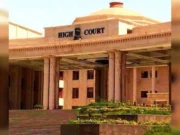
The Chandigarh Administration had challenged the High Court’s orders dated November 29, 2024, and subsequent directives, arguing that the High Court building, part of the Capitol Complex designed by renowned architect Le Corbusier and designated a UNESCO World Heritage Site in 2016, required prior approval from the UNESCO World Heritage Committee for any construction. The administration contended that the verandah construction could jeopardize the site’s heritage status, potentially leading to its delisting. It further noted that the Chandigarh Heritage Conservation Committee had given in-principle approval, subject to consultation with the Fondation Le Corbusier in Paris, and that the matter had been referred to the Archaeological Survey of India.
Rejecting these arguments, the Supreme Court observed, “The decision of the High Court in directing construction of the verandah in front of Courtroom No. 1, in alignment with the design of the three existing verandahs in front of Courtrooms Nos. 2 to 9, is absolutely justified and would not violate the UNESCO guidelines.” The bench emphasized that the proposed verandah was a “minimal protective measure” to address practical difficulties faced by litigants, particularly during inclement weather, as the Chief Justice’s courtroom is located in a separate block without a covered walkway.
The court also addressed the development of the kutcha parking area within the High Court premises, approving the use of eco-friendly green paver blocks and tree plantation. It rejected the administration’s claim that the area was a protected green belt under Chandigarh’s Master Plan, noting that the parking space, used by approximately 4,000 vehicles daily, was a longstanding necessity due to acute parking shortages. “The use of green paver blocks allows for rainwater percolation, minimizes dust, and enhances aesthetics without disturbing the ecological balance,” the court stated, directing the High Court to consult landscaping experts for tree plantation to further enhance the green cover.
The issue originated from a Public Interest Litigation (PIL) filed in 2023 by Vinod Dhatterwal, Secretary of the Punjab and Haryana High Court, seeking infrastructural improvements in the court complex. The High Court had ordered the verandah construction to be completed within six weeks and issued a contempt notice on December 13, 2024, against the Chandigarh Administration and its Chief Engineer, C.B. Ojha, for non-compliance. The Supreme Court, while upholding the High Court’s orders, stayed the contempt proceedings for 12 weeks to allow the administration to comply. It also clarified that the administration could seek ex post facto approval from the UNESCO World Heritage Committee if required, stating, “Such approval, if necessary, does not preclude the implementation of this minimal protective measure.”
The Chandigarh Administration had earlier secured a stay from the Supreme Court on January 10, 2025, against the High Court’s directive, citing potential risks to the Capitol Complex’s heritage status. However, the bench, after reviewing the case, found no merit in the administration’s apprehensions, noting that the verandah’s design was consistent with the existing architectural framework and did not constitute a major structural change.
This ruling highlights the judiciary’s commitment to addressing practical infrastructural needs while respecting the cultural and historical significance of heritage sites. The decision also underscores the importance of eco-friendly solutions in urban planning, particularly in spaces constrained by heritage regulations. The Punjab and Haryana High Court, designed by Le Corbusier as part of Chandigarh’s Capitol Complex, remains a symbol of modernist architecture, and the Supreme Court’s verdict ensures that its functionality is enhanced without compromising its global heritage value.