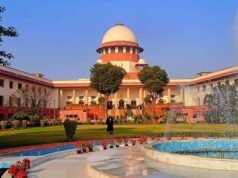


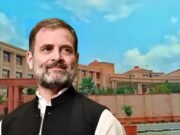
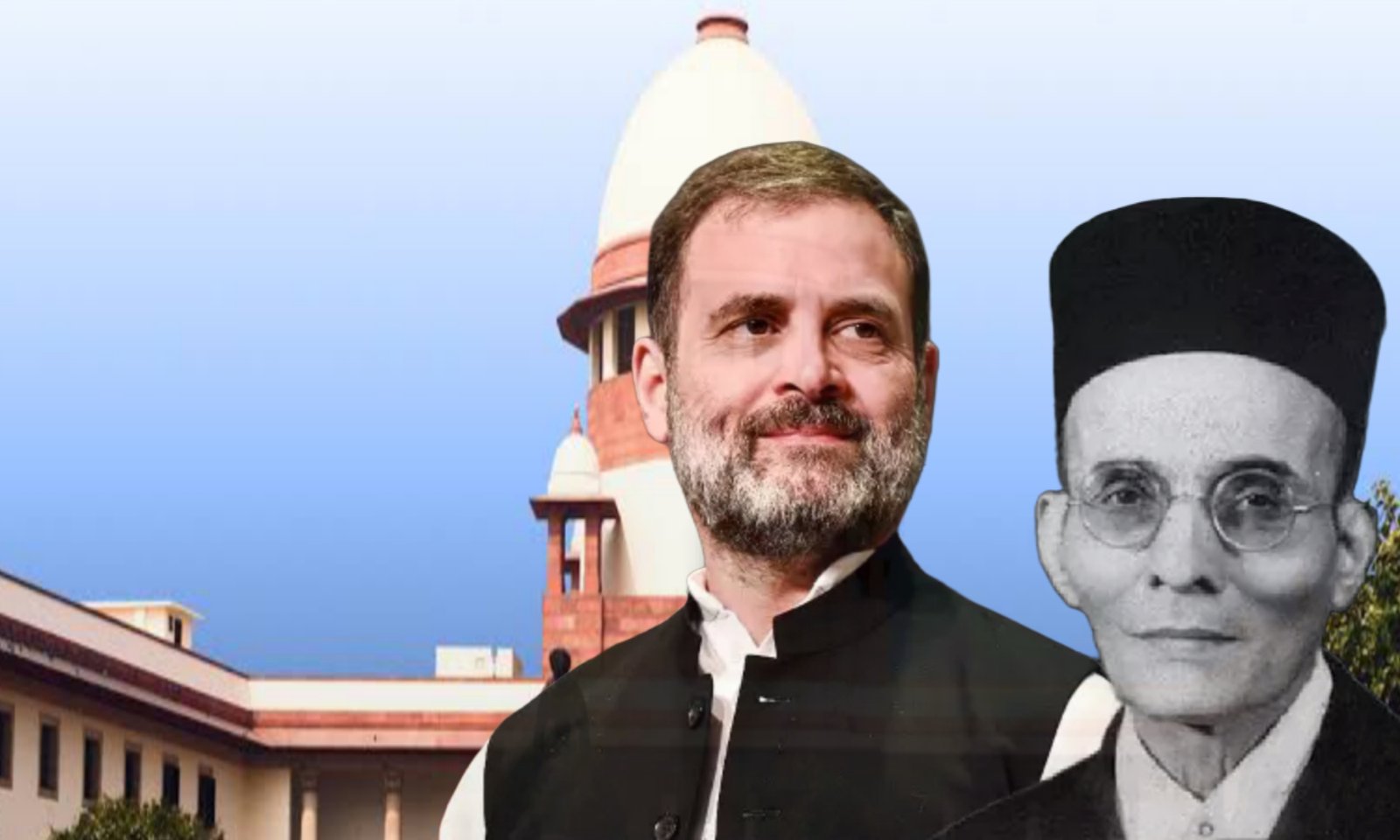
New Delhi, April 25, 2025 – The Supreme Court of India today sharply criticized Congress leader and Leader of Opposition Rahul Gandhi for his remarks against Hindutva ideologue Vinayak Damodar Savarkar, while granting a stay on criminal defamation proceedings pending against him in a Lucknow court. The bench, comprising Justices Dipankar Datta and Manmohan, warned Gandhi against making “irresponsible statements” about freedom fighters, emphasizing that such comments could prompt suo motu action in the future.
The defamation case stems from statements made by Gandhi during his Bharat Jodo Yatra in Akola, Maharashtra, on November 17, 2022, where he allegedly referred to Savarkar as a “servant of the British” who “took a pension from them.” These remarks led to a complaint by Advocate Nripendra Pandey, who argued that Gandhi’s statements were intended to spread hatred and defame Savarkar, a revered figure in Maharashtra and among nationalist groups.
Supreme Court’s Stern Warning
As the hearing commenced, Justice Datta expressed strong disapproval of Gandhi’s comments, questioning their historical accuracy. “Does your client know that Mahatma Gandhi also used ‘your faithful servant’ while addressing the Viceroy? Would you call him a servant of the British?” the judge asked Senior Advocate Abhishek Manu Singhvi, representing Gandhi. The court further noted that former Prime Minister Indira Gandhi, Rahul Gandhi’s grandmother, had praised Savarkar in a letter, highlighting his contributions to India’s freedom struggle.
Justice Datta emphasized the reverence for Savarkar in Maharashtra, stating, “He is worshipped there. Why do you go to Akola and make such statements? This is not how you treat our freedom fighters when you don’t know the history or geography of India.” The bench cautioned Gandhi, a prominent political figure, against fomenting trouble through such remarks, warning, “Any further statements, and we will take suo motu action without waiting for sanction. We will not allow you to speak anything against our freedom fighters who gave us freedom.”
Legal Context and Stay on Proceedings
The Supreme Court’s intervention came after the Allahabad High Court, on April 4, 2025, refused to quash the summons issued by the Lucknow court in the defamation case. Gandhi had challenged the summoning order, arguing for its dismissal, but the High Court directed him to pursue a revision petition in the sessions court instead. The complainant, Advocate Pandey, alleged that Gandhi’s statements violated Sections 153A (promoting enmity) and 505 (public mischief) of the Indian Penal Code, accusing him of weakening national unity by insulting Savarkar.
While staying the defamation proceedings, the Supreme Court acknowledged that Gandhi had a “good case on law” and was entitled to relief. However, the bench imposed a condition, with Senior Advocate Singhvi orally undertaking that Gandhi would refrain from making similar statements in the future. The court issued notices to the State of Uttar Pradesh and the complainant, scheduling the next hearing in eight weeks.
Historical Context and Controversy
The court’s remarks underscored the sensitivity surrounding Savarkar’s legacy. Justice Datta pointed out that even judges of the Calcutta High Court during British rule addressed the Chief Justice as “your servant,” a common formal expression that did not imply disloyalty. The bench expressed concern that Gandhi’s statements could set a precedent for derogatory remarks against other freedom fighters, asking, “Tomorrow, will someone call Mahatma Gandhi a servant of the British?”
Gandhi’s counsel defended his client, arguing that the remarks were part of political discourse and not intended to defame. However, the court remained firm, stressing the need for public figures to exercise caution when commenting on historical figures who played a significant role in India’s independence movement.
Broader Implications
This is not the first time Rahul Gandhi has faced legal scrutiny over his statements. He has been involved in multiple defamation cases, including a 2023 conviction in a Surat court over his “why all thieves have Modi surname” remark, which led to his temporary disqualification as a Lok Sabha MP. The Supreme Court later stayed that conviction, restoring his parliamentary membership. Additionally, Gandhi faces another defamation case in Pune, filed by Savarkar’s grandnephew Satyaki Savarkar, over alleged remarks made in a 2023 speech in the United Kingdom.
The Supreme Court’s ruling reflects the delicate balance between freedom of speech and respect for national icons, particularly in a politically charged environment. As the case progresses, it is likely to fuel further debate over the boundaries of political rhetoric and the legacy of India’s freedom fighters.
Stay tuned to Literal Law for updates on this case and other legal developments across India.
Source: Adapted from Supreme Court proceedings and related legal updates.