




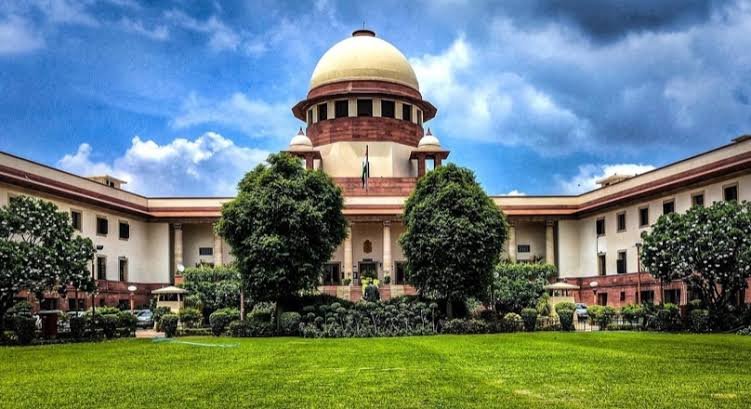
In a significant development, the Supreme Court of India has voiced strong concerns over the persistent lack of clarity in the country’s arbitration framework, urging the Ministry of Law and Justice to take a serious look at the Arbitration and Conciliation (Amendment) Bill, 2024. The Court highlighted that critical gaps in the Arbitration and Conciliation Act, 1996, remain unaddressed in the proposed 2024 Bill, particularly regarding the statutory recognition of arbitral tribunals’ powers to implead non-signatory parties.
A bench comprising Justices JB Pardiwala and R Mahadevan made these observations while hearing an appeal challenging a Delhi High Court ruling from July 2024 in the case of ASF Buildtech Pvt Ltd v. Shapoorji Pallonji and Company Pvt Ltd. The Court expressed disappointment that, despite nearly three decades since the enactment of the 1996 Act, procedural ambiguities continue to plague India’s arbitration regime. “What is expressly missing in the Act, 1996 is still missing in the Arbitration and Conciliation Bill, 2024, despite a catena of decisions of this court as well as the various high courts, highlighting the need for statutory recognition of such power in order to obviate all possibilities of confusion,” the bench remarked.
The Supreme Court emphasized the need for explicit statutory provisions to empower arbitral tribunals to join non-signatory parties, a practice that has been recognized in judicial precedents but lacks legislative backing. The bench noted that cases such as Cox and Kings Ltd. v. SAP India Pvt. Ltd. (2023) and Chloro Controls India Pvt. Ltd. v. Severn Trent Water Purification Inc. (2013) have underscored the legal foundation for such powers, yet the absence of clear statutory language continues to create uncertainty.
The Court urged the Department of Legal Affairs under the Ministry of Law and Justice to revisit the draft of the 2024 Bill and introduce necessary reforms to address these long-standing issues. “We urge the Department of Legal Affairs to take a serious look at the arbitration regime that is prevailing in India and bring about necessary changes while the Arbitration and Conciliation Bill, 2024 is still being considered,” the bench stated.
The observations came in the context of a challenge by ABPL, a non-signatory to an arbitration agreement, which contested its inclusion in arbitral proceedings. ABPL’s objections were dismissed by both the arbitral tribunal and the Delhi High Court, prompting the appeal to the Supreme Court. Affirming the High Court’s decision, Justice Pardiwala’s judgment clarified that once an arbitral tribunal is constituted, it should resolve all jurisdictional and factual issues, including the status of non-signatories, with courts intervening only in limited circumstances under Section 34 of the 1996 Act.