




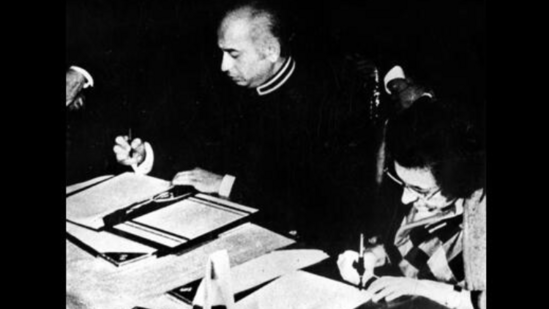
New Delhi, April 27, 2025 – The recent terror attack in Pahalgam, Jammu and Kashmir, which claimed 26 lives, has reignited tensions between India and Pakistan, bringing the 1972 Simla Agreement into sharp focus. As Pakistan announced the suspension of the agreement in response to India’s diplomatic measures, legal and geopolitical experts are revisiting the significance of this historic accord and its implications for bilateral relations.
The Simla Agreement, signed on July 2, 1972, by then-Indian Prime Minister Indira Gandhi and Pakistani President Zulfikar Ali Bhutto, was a landmark pact aimed at fostering peace following the 1971 Indo-Pak War. The agreement established the Line of Control (LoC) in Jammu and Kashmir, formalizing the ceasefire line after India’s decisive victory and the creation of Bangladesh. It committed both nations to resolve disputes bilaterally, respect the LoC, and refrain from using force to alter the status quo.
The Pahalgam attack, carried out on April 22, 2025, in the Baisaran Valley, targeted tourists and resulted in the deadliest militant assault in Indian-administered Kashmir since 2019. The Resistance Front (TRF), a group seeking Kashmiri independence, claimed responsibility, alleging discontent over demographic changes in the region. India has pointed to “cross-border linkages,” implicating Pakistan, while Pakistan’s Defence Minister Khawaja Asif denied involvement, attributing the violence to “homegrown” grievances.
In response, India imposed stringent measures, including suspending the Indus Waters Treaty, withdrawing from a volleyball event in Pakistan, and ordering Pakistani nationals to leave India by April 27, 2025, except those on medical visas. Pakistan retaliated by suspending all bilateral agreements, including the Simla Agreement, and pausing trade and visa services, deeming India’s actions an “act of war.”
Legal experts note that Pakistan’s suspension of the Simla Agreement raises complex questions about international law and bilateral commitments. The agreement’s sanctity lies in its role as a framework for dialogue and conflict resolution. By holding it in abeyance, Pakistan risks undermining the LoC’s legitimacy, potentially giving India greater flexibility in its military and diplomatic responses.