




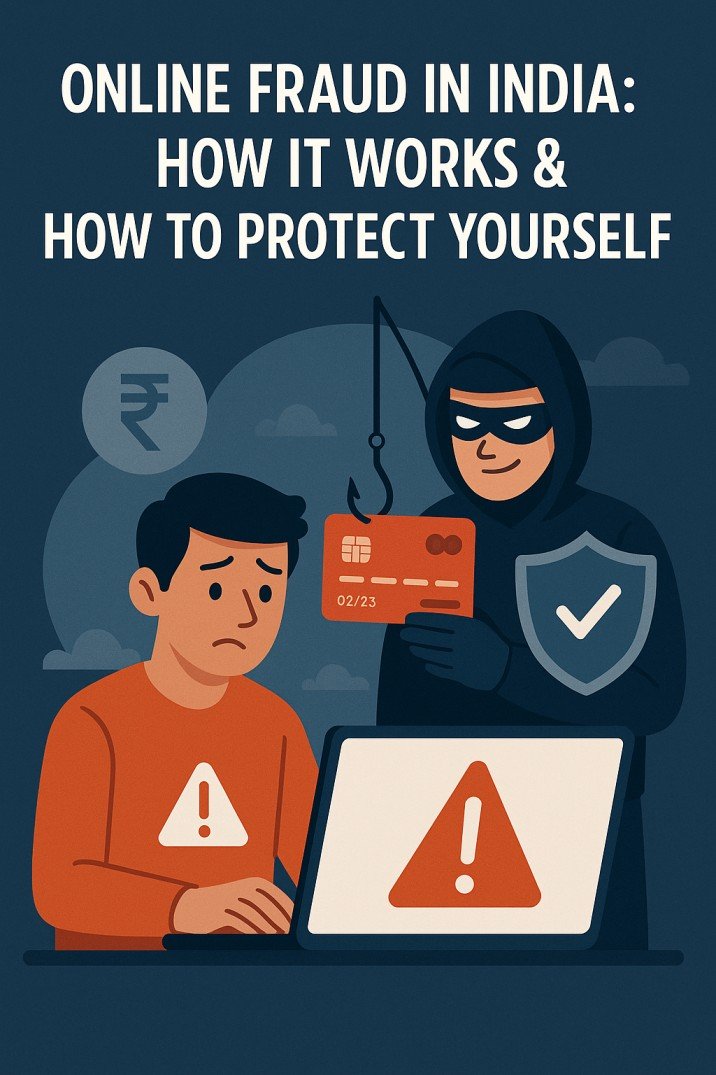
In the digital age, convenience comes with risks. From phishing emails to UPI scams, online fraud in India has skyrocketed. According to recent reports, India saw over 50,000 cybercrime cases in 2024 — and that’s just the reported ones.
But how exactly do these frauds happen? What does the law say? And most importantly — how can you protect yourself legally and practically?
🔍 What Is Online Fraud?
Online fraud is any deceptive activity committed using the internet or digital platforms, intended to cheat, steal, or manipulate users for financial gain. It includes:
-
Phishing scams
-
UPI fraud & QR code scams
-
Fake investment websites & job offers
-
Social engineering (impersonation, emotional manipulation)
-
Debit/Credit card skimming or OTP fraud
-
Online shopping frauds on fake e-commerce portals
-
Malware, ransomware attacks
⚠️ Popular Types of Online Scams in India
1. Phishing Emails & Messages
Fraudsters send fake emails/SMS that appear to be from banks or government entities asking for account info, OTPs, or login details.
Tip: No bank or govt body will ever ask for OTP or passwords via email or SMS.
2. UPI QR Code Scams
They say: “Scan this QR to receive money.” In reality, scanning it sends money from your account.
Tip: Never scan unknown QR codes. Receiving money doesn’t require scanning.
3. Fake Job/Loan Offers
People receive messages promising jobs or loans in exchange for small processing fees or documents.
Tip: Always verify company websites. Never pay money for job offers.
4. Online Marketplace Scams
Buyers/sellers on OLX, Facebook Marketplace etc. may use fake IDs, screenshots, or send malware links.
Tip: Avoid transactions outside trusted platforms. Use verified payment gateways.
🛡️ Legal Protection Against Online Fraud
India has a robust legal framework to combat cybercrime. Here are the key laws:
🔐 Information Technology Act, 2000
-
Section 66C: Identity theft
-
Section 66D: Impersonation for fraud
-
Section 43: Unauthorized access to computer systems
-
Section 67: Publishing obscene content electronically
Punishment: Fine + jail term up to 3–7 years depending on the offense.
🔐 Indian Penal Code (IPC)
-
Section 420: Cheating and dishonestly inducing delivery of property
-
Section 468: Forgery for cheating
-
Section 469: Forgery for harming reputation
-
Section 506: Criminal intimidation (common in ransom/malware attacks)
🧑⚖️ What Should You Do If You’re Scammed Online?
✅ 1. Immediate Steps
-
Don’t panic.
-
Take screenshots of chats, emails, payment confirmations, or calls.
-
Note the fraudster’s phone number, bank account, UPI ID, etc.
✅ 2. File a Complaint
-
Visit https://cybercrime.gov.in – India’s official cybercrime reporting portal.
-
You can file anonymously or with full details.
-
Alternatively, visit your nearest cyber police station.
✅ 3. Notify the Bank
-
Call your bank’s customer care and report the fraud immediately.
-
Block your card/account if needed.
-
Banks are now bound by RBI regulations to assist in fraud cases if reported promptly.
✅ 4. Legal Recourse
-
File an FIR under relevant sections of IPC & IT Act.
-
You can also approach a consumer forum if the fraud involves e-commerce or digital services.
💡 How to Protect Yourself from Online Scams
| DO’s | DON’Ts |
|---|---|
| Use official apps & verified websites | Never share OTPs or PINs |
| Keep your device updated | Don’t click on unknown links |
| Use two-factor authentication (2FA) | Don’t scan QR codes to “receive” money |
| Check URLs before entering login info | Don’t pay money for job offers or loans |
| Report suspicious activity immediately | Don’t ignore minor signs of fraud |
🧠 Pro-Tips from an Advocate:
-
Always double-check unknown calls or offers.
-
Avoid emotional decisions under urgency.
-
Use virtual cards for online payments (available from many banks).
-
Educate family, especially elders & children, about online safety.
-
Be alert. Scammers constantly evolve — you must too.
🛑 Conclusion: Prevention Is Better Than Regret
In today’s digital world, cyber fraud is not a question of if, but when. Staying informed and acting wisely can save you from big financial and emotional loss. And remember, the law is on your side — only if you speak up on time.
Need legal assistance in a cyber fraud matter? Reach out to [Literallaw Team]. Confidentiality and legal support — guaranteed.
#CyberSafety #OnlineFraud #LegalAwareness #CyberLawIndia