



Key Judgments on BNSS and BNS Reshape India’s Criminal Justice Landscap
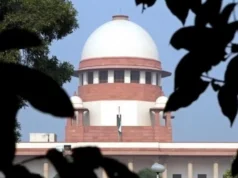
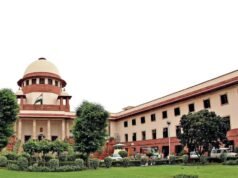
New Delhi, May 12, 2025: The introduction of the Bharatiya Nagarik Suraksha Sanhita (BNSS), Bharatiya Nyaya Sanhita (BNS), and Bharatiya Sakshya Adhiniyam (BSA) in July 2024 marked a pivotal shift in India’s criminal justice system, replacing the colonial-era Code of Criminal Procedure (CrPC), Indian Penal Code (IPC), and Indian Evidence Act. Recent judicial pronouncements from the Supreme Court and various High Courts have begun to interpret these new laws, offering clarity and addressing challenges in their implementation. These rulings are setting significant precedents, balancing procedural reforms with constitutional safeguards.
“The judiciary’s role in interpreting BNSS and BNS is pivotal, ensuring that India’s new criminal justice framework balances procedural innovation with constitutional safeguards.” – Senior Advocate Menaka Guruswamy
Supreme Court on Complainant Absence and Charge Framing
In a landmark ruling, the Supreme Court in Ranjit Sarkar vs. Ravi Ganesh Bhardwaj clarified that the absence of a complainant does not automatically lead to the acquittal of the accused under Section 279 BNSS (corresponding to Section 256 CrPC). The Court emphasized that acquittal is warranted only when the complainant’s absence occurs on the date set for the accused’s appearance, ensuring judicial discretion in such cases. “This interpretation prevents misuse of procedural lapses while upholding fair trial principles,” noted Justice Abhay Oka.
Another significant judgment in Directorate of Revenue Intelligence vs. Raj Kumar Arora (2025) restricted the scope of Section 239 BNSS (akin to Section 216 CrPC), holding that courts cannot delete charges already framed but may only add or alter them. This ruling reinforces the sanctity of the trial process, ensuring that charges, once set, are not arbitrarily undone.
High Courts Address Procedural Nuances
The Allahabad High Court, in Kajal and Another vs. State of U.P. ruled that investigating officers cannot be compelled to record statements of specific witnesses under Section 183 BNSS. The court underscored the agency’s autonomy in witness selection, stating, “The investigating officer’s prerogative is critical to maintaining the integrity of the probe.” This decision highlights the balance between judicial oversight and investigative independence.
The Kerala High Court, in V.I. Thankappan vs. State of Kerala, addressed protections for accused persons with mental disabilities, such as Alzheimer’s, under BNSS. The court held that trials must be postponed if the accused is incapable of defending themselves, reinforcing constitutional guarantees of a fair trial. Justice K Babu observed, “Mental disability, like dementia, demands procedural safeguards to ensure justice is not denied.”
Meanwhile, the Chhattisgarh High Court expanded judicial discretion in anticipatory bail under Section 482 BNSS, noting that the removal of “guiding factors” from the CrPC allows courts greater flexibility. This shift has sparked debate over potential inconsistencies in bail rulings.
Controversies and Constitutional Challenges
The new laws have not been without contention. A Public Interest Litigation (PIL) before the Kerala High Court challenged Section 69 BNS, which criminalizes sexual intercourse based on false promises of marriage, arguing it is regressive and discriminatory toward the LGBTQ community. The petitioner contended that the provision undermines gender equality and personal autonomy.
Similarly, a petition filed by former MP Vinod Kumar Boinapally in the Supreme Court questioned the constitutionality of provisions like Section 113 BNS (on organized crime and terrorism) and Section 173(3) BNSS (allowing preliminary inquiries before FIR registration). Critics argue that these clauses grant excessive discretion to law enforcement, potentially violating the Supreme Court’s mandate in Lalita Kumari vs. Govt. of U.P. (2014) for mandatory FIR registration in cognizable offences.
Technological Integration and Procedural Reforms
The BNSS has introduced measures like online FIR registration, mandatory forensic investigations, and control rooms in police stations, as seen in Maharashtra’s implementation of Section 37 BNSS. The Delhi High Court praised these reforms, with Justice Amit Mahajan noting, “BNSS heralds a transformative era in criminal justice, promoting transparency and accountability.” However, concerns persist about inadequate forensic infrastructure and the risk of misuse of extended police custody periods under Section 187 BNSS.
Navigating the Transition
The Jammu & Kashmir and Ladakh High Court, in Anil Kumar Yadav vs. Directorate of Enforcement, clarified that the applicability of BNSS or CrPC depends on the stage of proceedings as of July 1, 2024. Fresh proceedings post this date must follow BNSS, regardless of when the offence occurred, ensuring procedural consistency.
As courts continue to interpret these laws, the judiciary’s role in safeguarding constitutional rights while adapting to modern procedural frameworks remains crucial. “The new criminal laws are a bold step, but their success hinges on judicial vigilance and robust implementation,” remarked Senior Advocate Menaka Guruswamy, representing a petitioner challenging BNSS provisions.
Conclusion
The evolving jurisprudence around BNSS and BNS reflects a judiciary striving to balance innovation with justice. As more cases reach the higher courts, these judgments will shape the contours of India’s criminal justice system, ensuring that the transition from colonial laws to a modern framework upholds fairness and equity. For legal practitioners and citizens alike, staying abreast of these developments is essential to navigating this transformative phase.
Literal Law will continue to track these developments, offering insights into India’s evolving legal landscape.